

Kritika
Anyone walking among the low houses and whitewashed façades of Kritika, a stone's throw from the walls of Kos Town, would hardly i...
Updated 8 July 2026
This season · July · Summer
What to do in Kritika now
The story
The story of Kritika
A name born of an exodus
The story of Kritika begins far from Kos, on the island of Crete, where the uprisings and conflicts of the early twentieth century drove whole families to seek refuge elsewhere. Many landed in the Dodecanese, then under Ottoman and later Italian administration, and found in Kos a strip of land on the edge of the walled town where they could rebuild a community. They did not found an anonymous village: the inhabitants chose to call it simply Kritika, "the Cretans", proudly claiming their origin rather than letting it fade. The first houses followed the compact layout of Cretan villages, with inner courtyards sheltered from wind and sun, quite different from the more open plan of the historic quarters of Kos Town. That original nucleus is still legible in today's urban fabric, having survived the earthquakes that have repeatedly shaken the island, including the violent 1933 quake that levelled much of the main town.
The village: white lanes and neighbourhood life
Walking through Kritika means leaving behind the tourist bustle of Kos's seafront and finding the true measure of a real village. The streets are narrow, often pedestrian, lined with single-storey houses with coloured doors, pots of geraniums and small votive shrines on the corners. At the heart of the village small squares open up, a gathering place for the elderly in the cool evening hours and the setting for patron-saint feasts that liven up the neighbourhood in summer. The Orthodox churches, simple in structure but carefully finished, still hold the devotions brought by the Cretan founders. It is a residential neighbourhood in every sense, not an open-air museum: precisely for this reason it offers an authentic image of the less touristy Kos, the one lived in all year round.
Kos Town and the Castle of the Knights
A few steps from Kritika lies Kos Town, the island's main town and gateway to its historical heritage. At the harbour entrance stands the bulk of Neratzia Castle, a fortress built from the fourteenth century onwards by the Knights of St John of Jerusalem to protect the island from Ottoman attacks and pirate raids. Its double ring of walls, bastions and moats, today linked to the old town by a bridge, tell of a long period in which Kos was a strategic outpost in the eastern Mediterranean. Walking the castle's ramparts offers one of the widest views over the harbour, the old town and, on clear days, the Turkish coast glimpsed on the horizon, a reminder of just how narrow the strait was that the island guarded.
The Plane Tree of Hippocrates and the Asklepion
Kos is the birthplace of Hippocrates, the ancient physician regarded as the father of Western medicine, and the island never misses a chance to recall it. In the town's main square grows the enormous plane tree known as the "Tree of Hippocrates": tradition holds that in its shade the physician taught his disciples, although the tree visible today, propped up by ancient columns reused as supports, is in fact much younger than its namesake. Just outside town, on a scenic hill about four kilometres away, spread the ruins of the Asklepion, the sanctuary dedicated to Asclepius where one of the most important medical schools of the ancient world once stood. The multi-level terraces, the remains of the Doric temple and the porticoes evoke a place that was at once one of healing, study and worship, a destination for pilgrims from across the Mediterranean.
Between coast and Mount Dikeos: the landscape of Kos
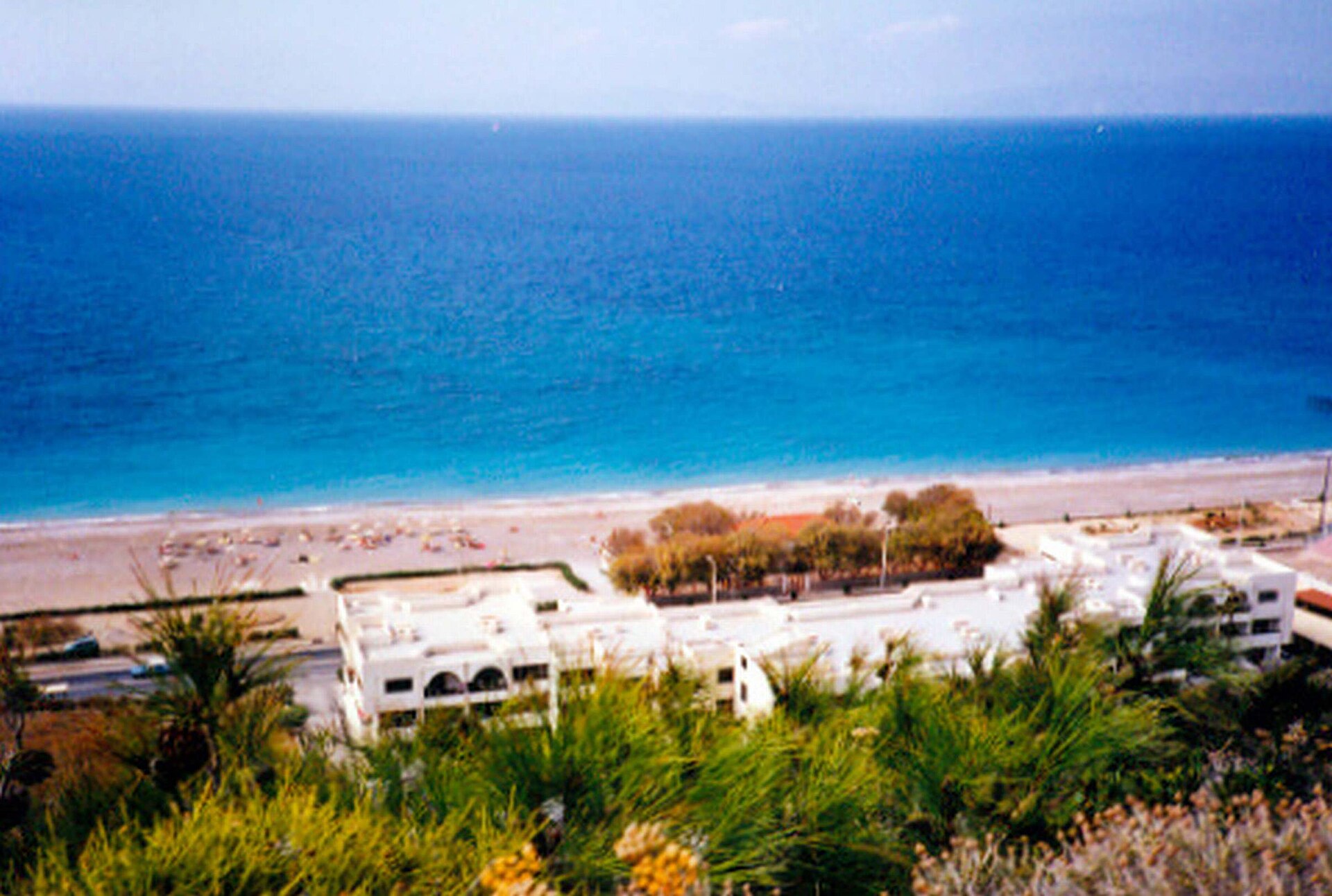
The land around Kritika alternates low, sandy coastlines with a hilly hinterland dominated by Mount Dikeos, which at around eight hundred metres is the island's highest peak. Along the northern side stretch the long, fine-sand beaches of Tigaki and Marmari, ideal for families and for sailing sports thanks to steady winds; to the south, beyond the Kefalos peninsula, the coastline grows more jagged, with coves such as Agios Stefanos, overlooked by the remains of an ancient early-Christian basilica and the tiny islet of Kastri. Inland, villages perched on the slopes of Dikeos, such as Zia, keep a more rural atmosphere, amid olive groves, vineyards and paths climbing toward the ridge, a prime vantage point for Aegean sunsets.
The table of Kritika: flavours and traditions
The cuisine of Kritika still bears the marks of its Cretan origin, blended with the gastronomic tradition of the Dodecanese. In the neighbourhood's taverns it is not unusual to find kalitsounia, small pastry parcels filled with fresh cheese or wild field herbs, a recipe that came straight from Crete with the first inhabitants. Alongside these sit the island's typical dishes: oven-baked meat with vegetables, snails stewed slowly, local cheeses such as posa and mizithra, thyme honey gathered on the slopes of Dikeos and wine from the small wineries of the hinterland. Fish, served simply grilled in the harbour taverns, completes a repertoire that favours local ingredients and slow cooking, the legacy of a farming and seafaring culture still very much alive.
What not to miss in Kritika and around
- An evening stroll through the lanes and little squares of the village of Kritika
- The Castle of the Knights of Neratzia, at the mouth of Kos Town's harbour
- The Plane Tree of Hippocrates and the Ottoman quarter with its mosque and bazaar
- The ruins of the Asklepion, on the hill a few kilometres from the centre
- The sandy beaches of Tigaki and Marmari, on the northern coast
- The mountain village of Zia, for sunset over Mount Dikeos
- The bay of Agios Stefanos and the islet of Kastri, on the Kefalos peninsula
When to go and how to experience the village
The most balanced time to visit Kritika and the island of Kos runs from May to June and from September to early October, when temperatures stay pleasant, the sea is already warm and the flow of tourists is lighter than at the height of August. In these months it is easier to enjoy the village's taverns without crowds and to spend time unhurried both in the historic centre of Kos Town and on excursions into the hinterland and Mount Dikeos. Summer, though, remains the season of patron-saint feasts and neighbourhood festivals, genuine occasions to taste the local cuisine and see Kritika at its liveliest. The village can easily be explored on foot in a couple of hours, but deserves a place in a broader itinerary alongside Kos Town and its monuments.
FAQ
Come si arriva a Kritika da Kos Città?
Quanto tempo serve per visitare Kritika?
Dove si parcheggia?
Kritika è adatta a famiglie con bambini?
Qual è il periodo migliore per la visita?
Si può visitare Kritika insieme all'Asklepion in un solo giorno?
Getting there
- Aeroporto Internazionale di Kos "Ippocrate" (KGS), circa 24 km da Kritika
- Kritika è collegata alla rete stradale principale dell'isola: da Kos Città si raggiunge in pochi minuti seguendo le indicazioni verso il quartiere periferico a ovest delle mura; dall'aeroporto si percorre la strada che attraversa l'isola in direzione nord-est fino al capoluogo.
- Conviene noleggiare un'auto o uno scooter in aeroporto o a Kos Città per muoversi con libertà tra il borgo, le spiagge del nord e i villaggi di montagna; nei mesi estivi meglio lasciare il mezzo ai margini di Kritika e proseguire a piedi lungo i vicoli, spesso troppo stretti per le auto.
Perfect for
Dal Castello dei Cavalieri all'Asklepion, l'area attorno a Kritika condensa duemila anni di dominazioni e culti, fino alla storia più recente dei profughi cretesi.
Le spiagge sabbiose di Tigaki e Marmari, a breve distanza, offrono acque basse e fondali dolci adatti a lunghe giornate in riva al mare.
Le taverne di quartiere mescolano ricette cretesi come le kalitsounia ai sapori tipici del Dodecaneso, tra formaggi locali, miele e vino dell'entroterra.
Il monte Dikeos e i villaggi che vi si arrampicano regalano sentieri, uliveti e punti panoramici perfetti per chi cerca l'entroterra meno battuto.
I vicoli e le piazzette di Kritika conservano un ritmo quotidiano autentico, lontano dal viavai del lungomare turistico di Kos Città.
To see