Periyiali
Nestled along the eastern coast of Lefkada, where the hills slope gently down to a sea that resembles a crystal-clear lake, Periyi...
Updated 7 July 2026
This season · July · Summer
What to do in Periyiali now
The story
The story of Periyiali
A crossroads of stories between sea and land
The history of Periyiali is inseparably tied to the story of Lefkada, the island that was never quite an island thanks to its isthmus. Since antiquity, this eastern coast has been a safe haven for sailors thanks to its calm, sheltered waters. During the Middle Ages and the long period of Venetian rule, the Periyiali area served as farmland and a lookout zone, far from the main fortifications but vital to the local economy based on olive oil and fishing. The Serenissima left an indelible mark on the rural architecture and land management, still visible today in the dry-stone walls and in the care of the centuries-old olive groves surrounding the village.
In the 19th century, with the passage under British protectorate rule and the subsequent union with the Kingdom of Greece, the area began to change. However, the real turning point came in the 20th century, when its proximity to the island of Skorpios, purchased by the tycoon Aristotle Onassis, brought Periyiali and neighboring Nydri into the international jet-set spotlight. Despite this touch of glamour, the village managed to preserve a human, discreet dimension, staying true to its roots as a community bound to land and sea, protecting the landscape that poets such as Aristotelis Valaoritis celebrated in their immortal works.
A view over the Princess Islands
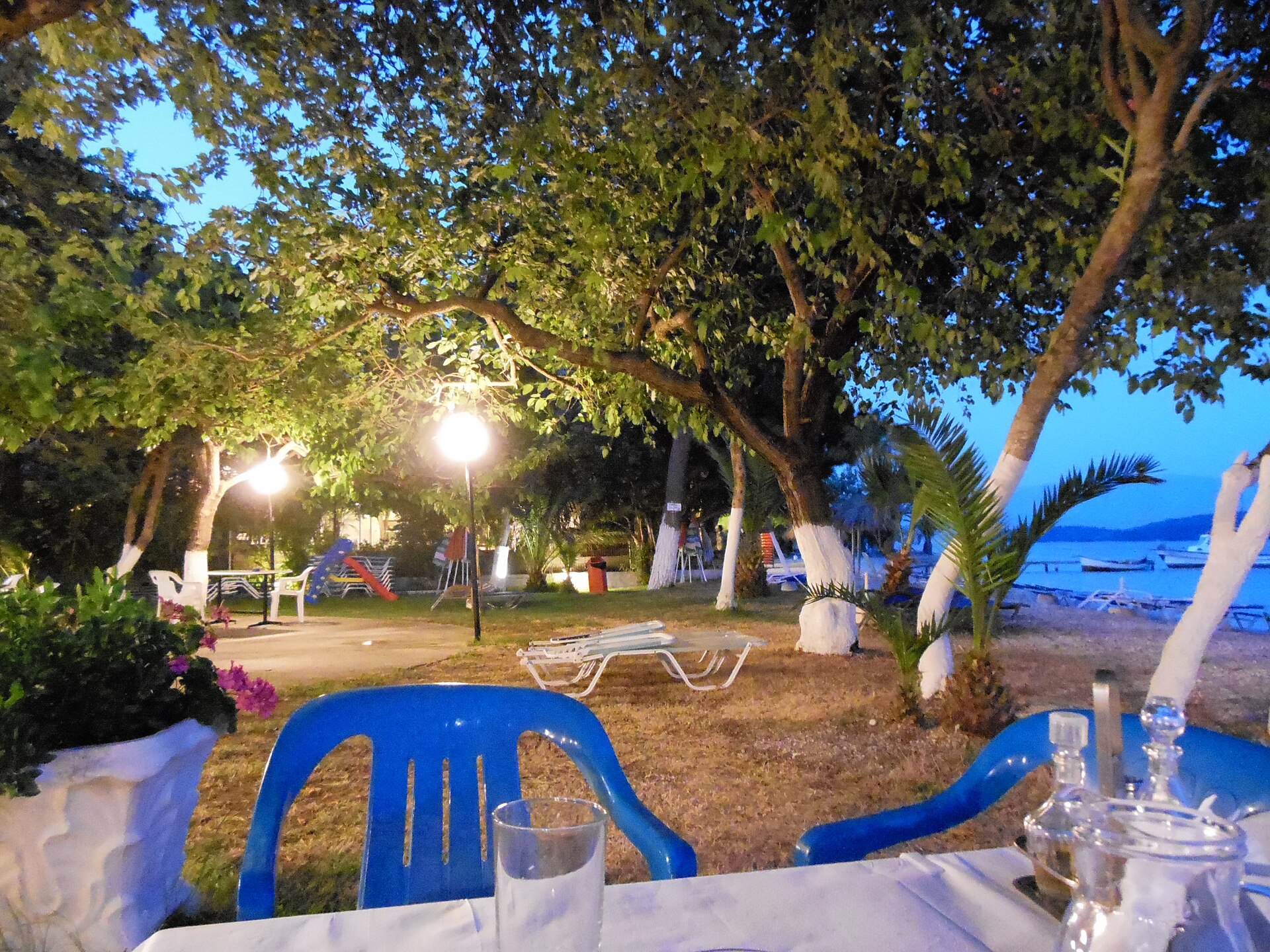
Periyiali's true 'monument' is not made of stone, but of horizon. From its shores and heights you enjoy the closest and most spectacular view of Skorpios, the private island that was the setting for the wedding of Onassis and Jackie Kennedy. Beside it stands out Madouri, the island of the Valaoritis family, where a splendid yellow neoclassical villa emerges among the pines. This private archipelago, which also includes Sparti and Cheloni, creates a labyrinth of sea channels and sheltered bays that make the panorama of Periyiali unique in the world, a living picture where contemporary history and nature merge in an unforgettable embrace.
The Red Church (Kokkini Ekklisia)
A short distance from Periyiali, heading up toward the hills that lead to the village of Platystoma, lie the evocative remains of the Kokkini Ekklisia, or Red Church. Founded in 1478, it owes its name to the color of the bricks and mortar used in its construction. This ancient monastery, dedicated to the Annunciation, is a place of deep spirituality and archaeological charm. Although only parts of the original structure remain today, the atmosphere within its walls, surrounded by centuries-old oak trees, speaks of centuries of devotion and cultural resistance through various foreign occupations. It is a site well worth visiting for the peace it conveys and for the exceptional historical value it represents for the entire region.
The Dimosari Waterfalls
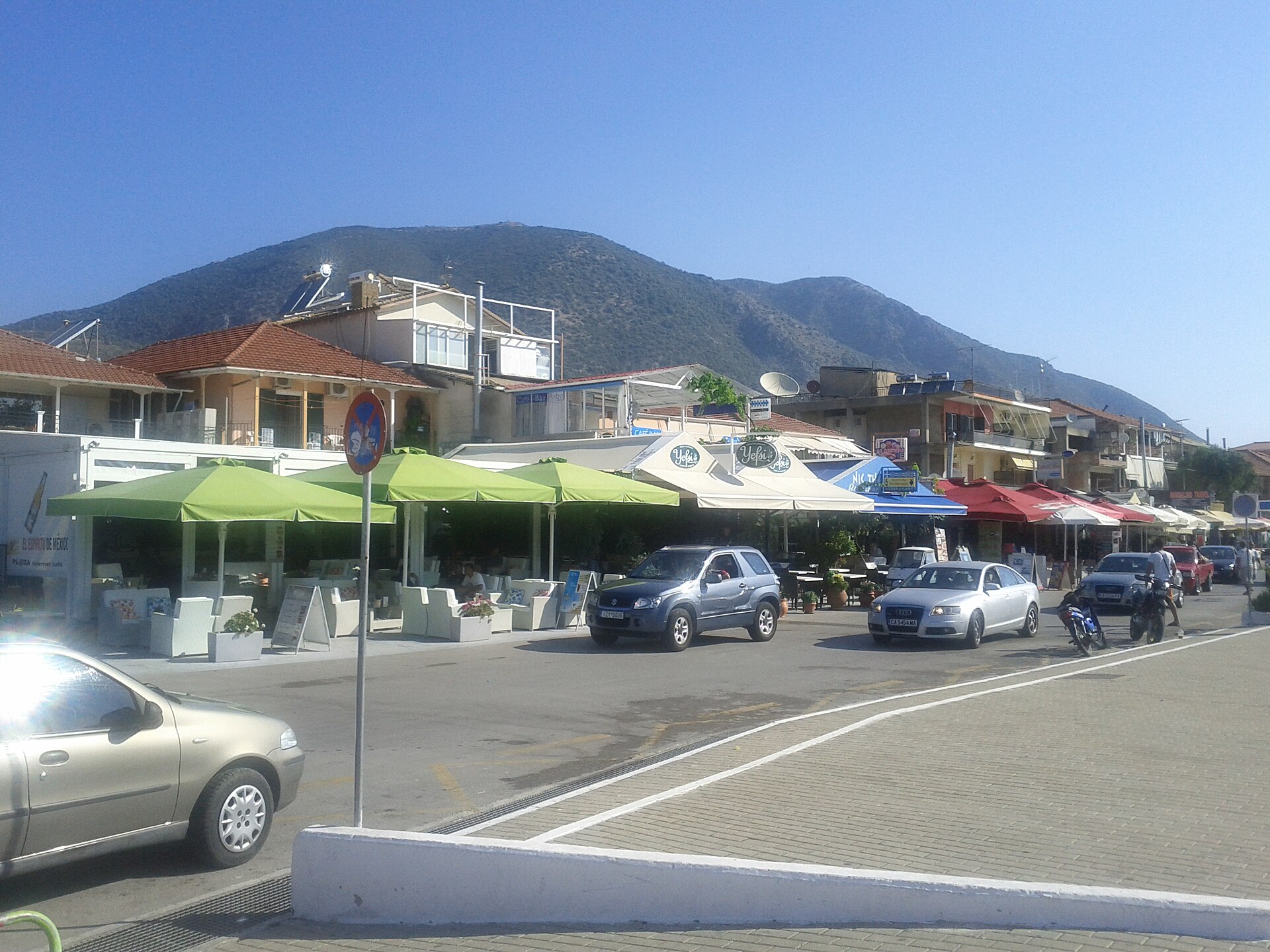
Located just a few minutes' drive or a pleasant walk from Periyiali, the Dimosari gorge offers an unexpected natural spectacle on a Greek island. A well-marked trail winds through limestone rocks and lush vegetation of plane trees and ferns, following the course of a stream that forms small natural pools of icy, crystal-clear water. The high point of the walk is the main waterfall, which makes a dramatic drop into an amphitheater of white rock. It is the perfect place to escape the summer heat and discover the wilder, cooler side of Lefkada's interior, a fascinating contrast to the sun-drenched beaches of the coast.
The Little Church of Agia Kyriaki
Directly opposite Periyiali, on the tip of the Geni peninsula that closes off the bay, stands the small white chapel of Agia Kyriaki. Best reached by boat, this little church seems to float on the water. It is a symbolic place for the locals, often chosen for weddings held in a dreamlike setting. Its isolated position, surrounded by the sea and the dark green of the cypress trees, offers a reverse perspective on Periyiali and the mountains behind it, allowing visitors to fully appreciate the fjord-like shape of this stretch of coast, where the land seems to want to embrace the sea in every inlet.
Nature and Landscape: Between Olive Groves and Emerald
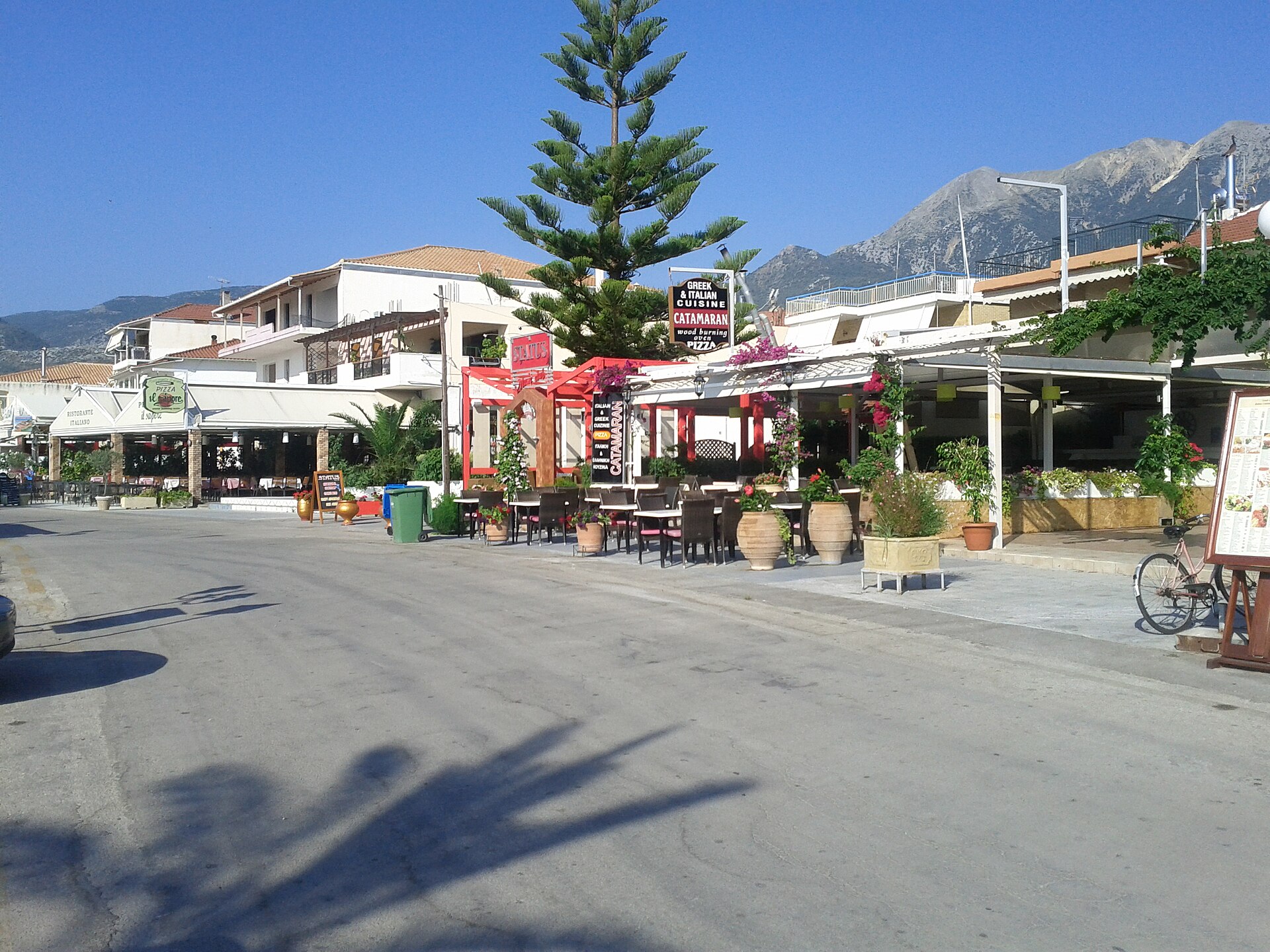
The landscape of Periyiali is defined by a chromatic duality: the deep green of the olive groves and pine woods descending from the mountains, and the shifting blue of the sea. Unlike the western coast, famous for its spectacular cliffs and powerful surf, Periyiali's coastline offers calm waters, almost free of waves, ideal for swimming and light water sports such as kayaking or paddleboarding. The beaches are mostly made of smooth white pebbles, which give the water an extraordinary clarity. The interior is a maze of paths crossing old agricultural terraces, offering privileged vantage points over the jagged coastline and the mountains of Aetolia-Acarnania standing majestically on the mainland.
Traditions and Flavors of the Land
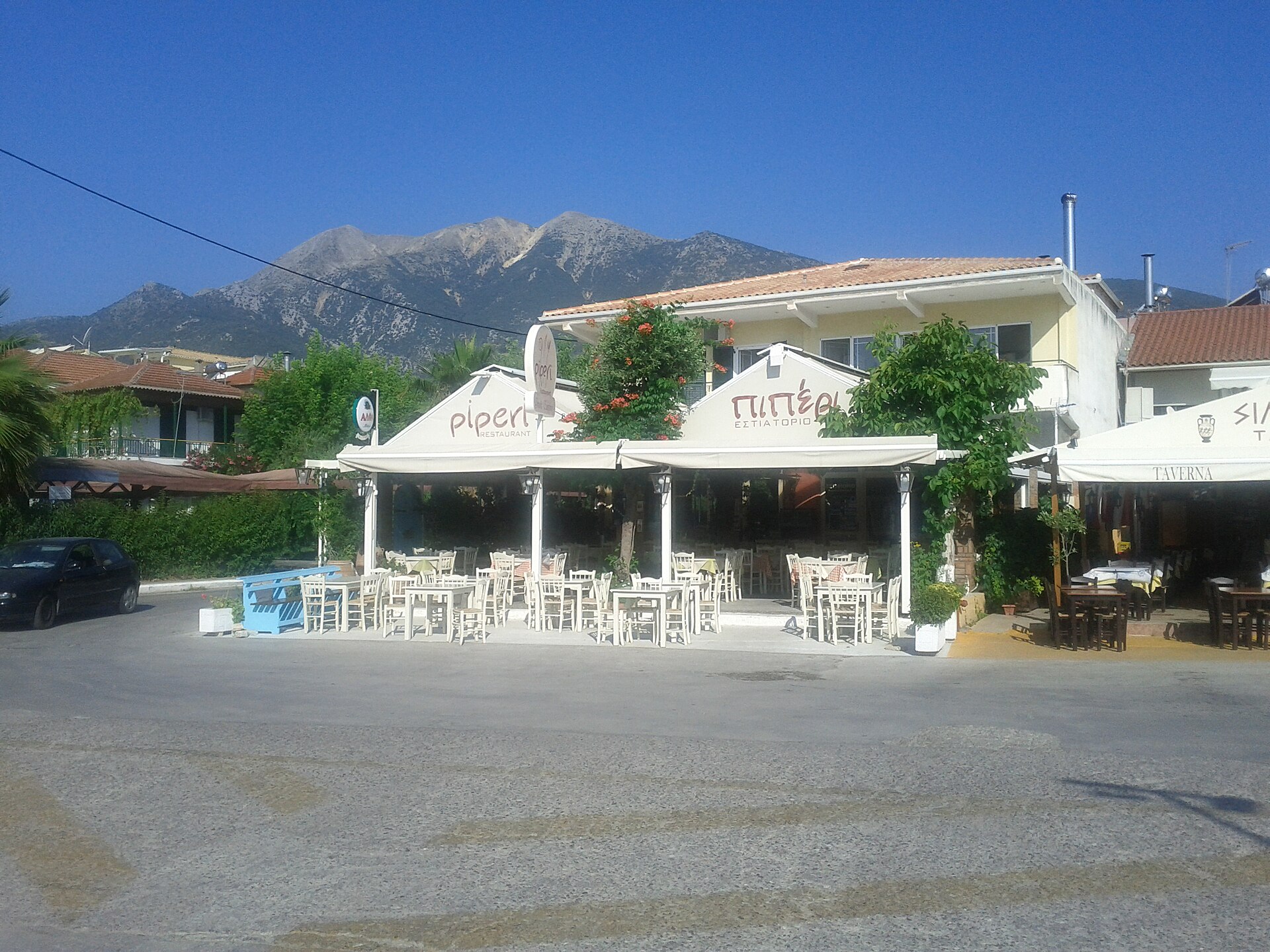
The culinary culture of Periyiali reflects the island's dual soul. In the restaurants along the seafront, fresh fish is a must, often caught during the night by small local fishing boats: sea bream, gilthead and octopus, cooked simply and dressed with excellent local olive oil. But Periyiali is also close to the production areas of the famous Eglouvi lentils, considered among the best in Greece, and the thyme honey of the nearby mountains. You cannot leave without trying 'Ladopita', a traditional cake made with olive oil, flour and sugar, typical of festivities and moments of conviviality, which captures the island's peasant history in a single bite.
Experiences Not to Be Missed
- Rent a small motorboat to freely explore the deserted coves of Skorpios and Madouri.
- Walk the trail to the Dimosari Waterfalls in the early morning light to enjoy the solitude and the cool air.
- Dine at one of the seafront taverns and try 'Bourdeto', a spicy fish soup typical of Ionian tradition.
- Visit the mountain village of Platystoma to discover its rural stone architecture and enjoy an aerial view over the bay.
- Take a sunset kayak excursion, when the sea turns into a mirror and the colors become warm and enveloping.
When to Go and How to Experience Periyiali
The ideal period to visit Periyiali runs from May to October. Late spring (May and June) is perfect for those who love trekking and blooming nature, with mild temperatures and absolute peace. July and August are the hottest and liveliest months, ideal for seaside life, although the area remains quieter than nearby Nydri. September and early October offer perhaps the best experience: the sea is still warm, the light is softer and tourist numbers decrease, allowing visitors to enjoy the village at a restorative, unhurried pace. Periyiali is easy to explore on foot, but having your own vehicle is recommended for exploring the peaks of Mount Elati or the wild beaches on the opposite side of the island.
FAQ
Cosa vedere a Periyiali in un giorno?
È un luogo adatto alle famiglie con bambini?
Dove si può parcheggiare a Periyiali?
Quanto dista Periyiali da Nydri?
Getting there
- Aeroporto di Aktion (Preveza) - 35 km
- Non sono presenti linee ferroviarie sull'isola di Lefkada.
- Si raggiunge percorrendo la strada costiera orientale di Lefkada che collega il capoluogo a Nydri e Vasiliki.
- Lefkada è collegata alla terraferma da un ponte mobile gratuito, quindi non è necessario prendere traghetti per arrivare sull'isola.
Perfect for
Ideale per chi cerca acque tranquille, trasparenze uniche e la comodità di piccole spiagge di ciottoli a portata di mano.
Punto di partenza perfetto per esplorare in barca l'arcipelago delle Isole dei Principi e le baie riparate della costa est.
Ottima base per escursioni verso le cascate, i sentieri montuosi e i borghi rurali dell'entroterra di Lefkada.