Khaniotis
The name itself carries a roadside story: it is said that Khaniotis derives from "khani", the Greek word for inn, because here, al...
Updated 9 July 2026
This season · July · Summer
What to do in Khaniotis now
The story
The story of Khaniotis
The Kassandra peninsula and its origins
Kassandra is the westernmost of the three prongs into which Chalkidiki divides toward the Aegean Sea, and its name comes from Cassander, general and later king of Macedonia after the death of Alexander the Great, who in 316 BC refounded the ancient Corinthian colony of Potidaea, renaming it Kassandreia. The city stood on the isthmus that still today connects the peninsula to the mainland, cut by a navigable canal dug in modern times. Even earlier, in the archaic age, the area had been colonized by cities of southern Greece attracted by the mineral and agricultural resources of Chalkidiki, and on this coast flourished centers such as Mende, famous in antiquity for its wine, and Aphytis, home to a sanctuary dedicated to Zeus Ammon. Khaniotis, although it does not boast archaeological remains of note within its own boundaries, thus finds itself immersed in a territory of ancient historical stratification, which passed through Greek colonization, the Macedonian period, the Roman one and then the Byzantine and Ottoman centuries.
From foreign rule to the twentieth-century revival
Like much of Chalkidiki, Kassandra too experienced centuries of Byzantine domination, raids and monastic settlements linked to nearby Athos, and finally the long Ottoman period, during which the peninsula was partly depopulated and used as an agricultural estate. The turning point came in the early twentieth century, with the end of the Ottoman empire and, above all after 1922-1923, with the population exchange between Greece and Turkey: thousands of Greek refugees from Asia Minor and the Ionian coast settled along this coast, founding or repopulating villages such as Nea Fokea, whose name recalls the ancient city of Phocaea in Ionia. Khaniotis grew in parallel as a small farming and fishing center, before transforming, starting in the 1960s and 1970s, into one of the favorite seaside destinations for Thessalonians and, later, for tourists from all over central Europe, thanks to its proximity to Thessaloniki airport.
The seafront and the village center
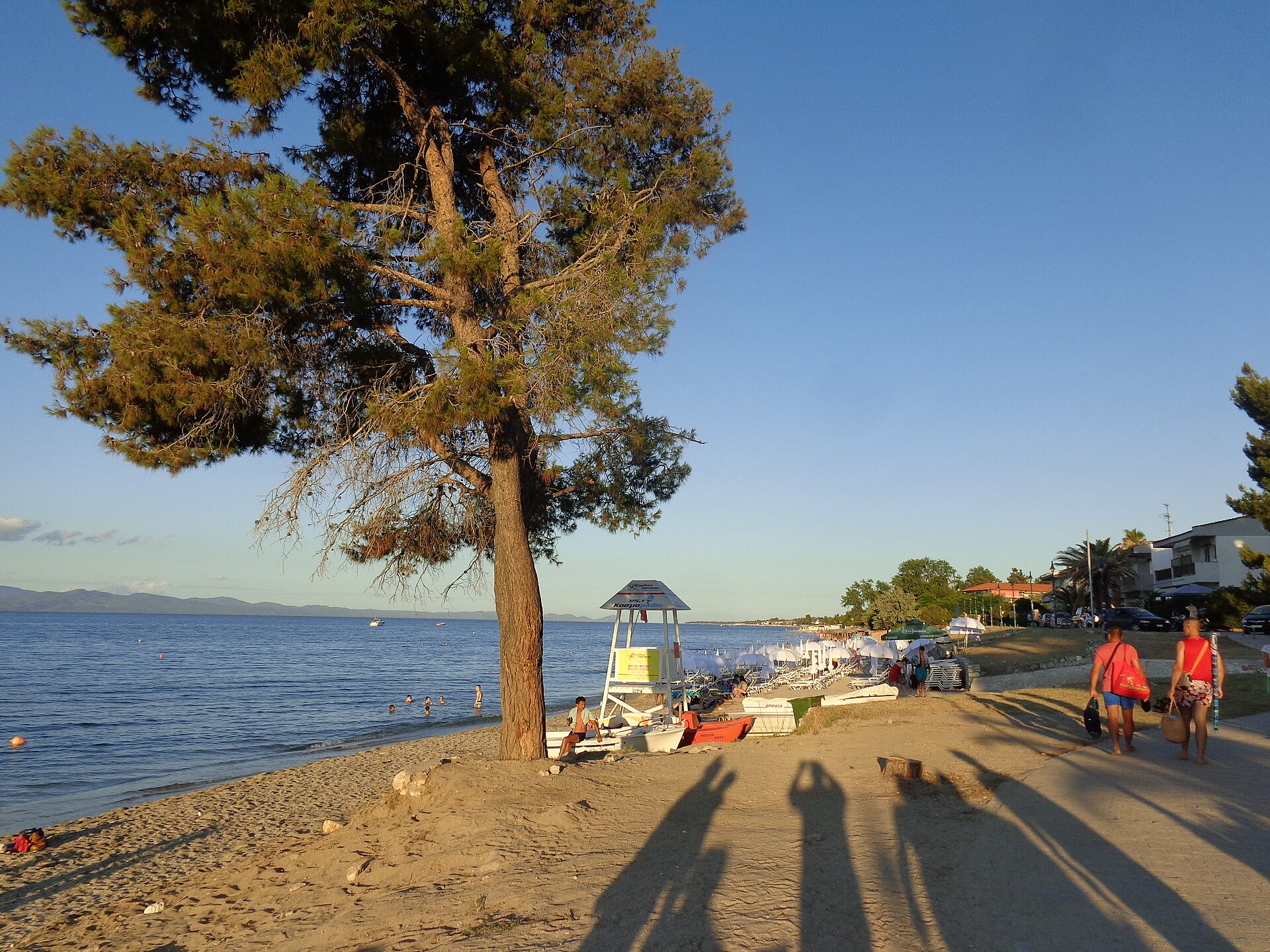
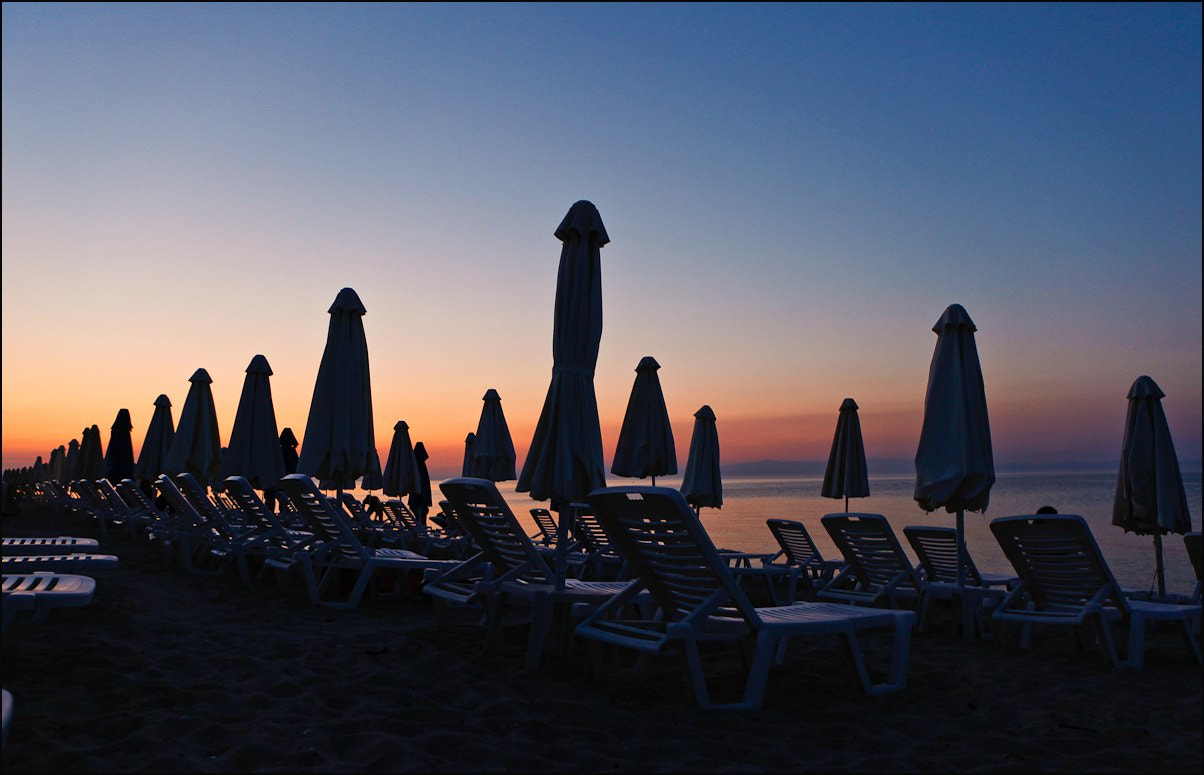
The heart of daily life in Khaniotis is the seafront, a pedestrian promenade that runs along the beach and is lined with fish taverns, ice-cream parlors, souvenir shops and small family-run hotels. The urban fabric is low-rise and sparse, with villas and residences that thin out toward the interior, leaving room for gardens and olive groves: town planning designed for mid-range seaside tourism, without large hotel complexes, which keeps the village an atmosphere still fairly authentic compared to other more built-up destinations in Chalkidiki. At sunset the seafront gradually comes to life, with the taverns setting outdoor tables and the first venues beginning to play music, in a crescendo that culminates in the later hours of the evening, typical of the Greek holiday rhythm.
The Khaniotis beach
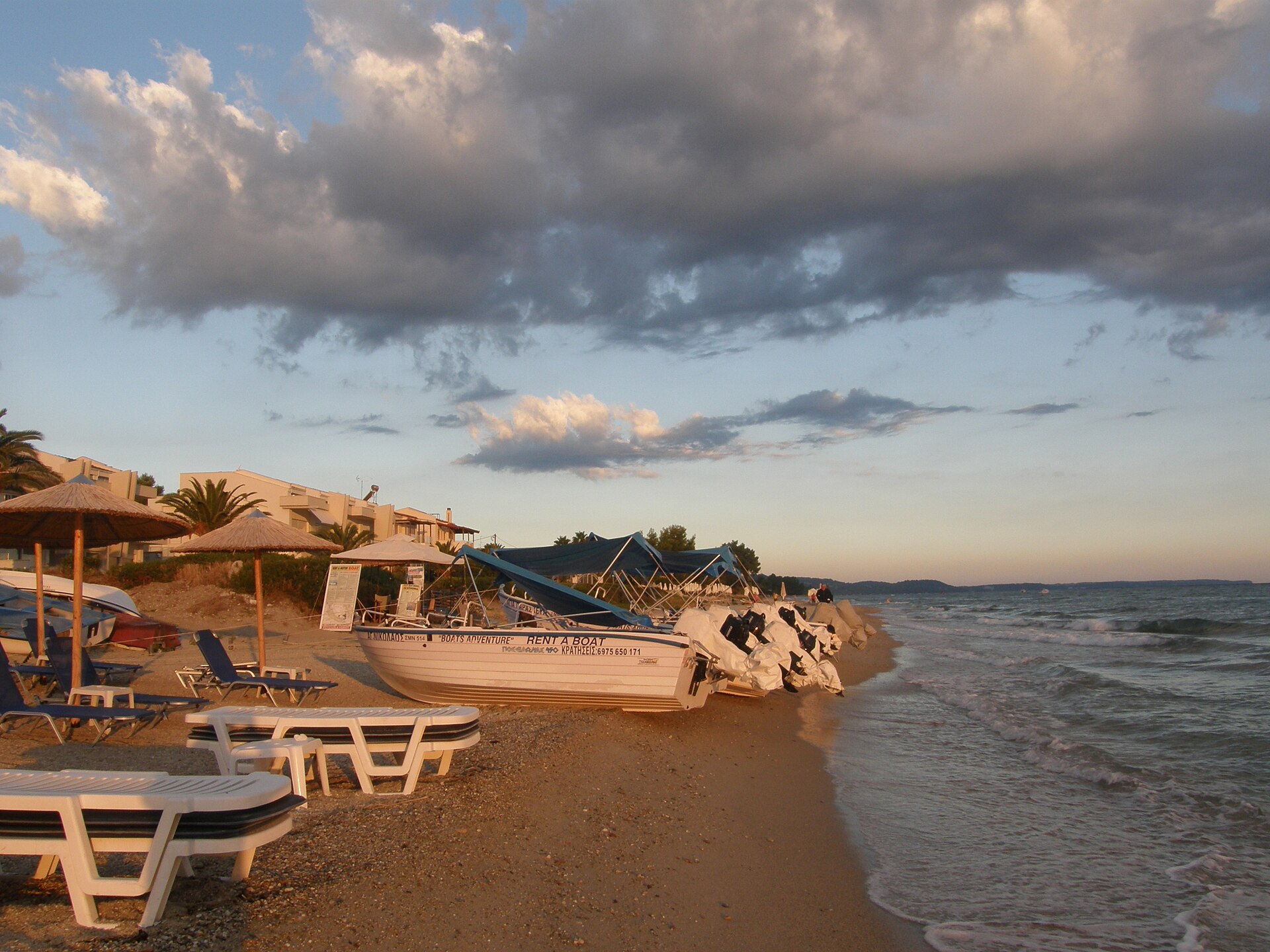
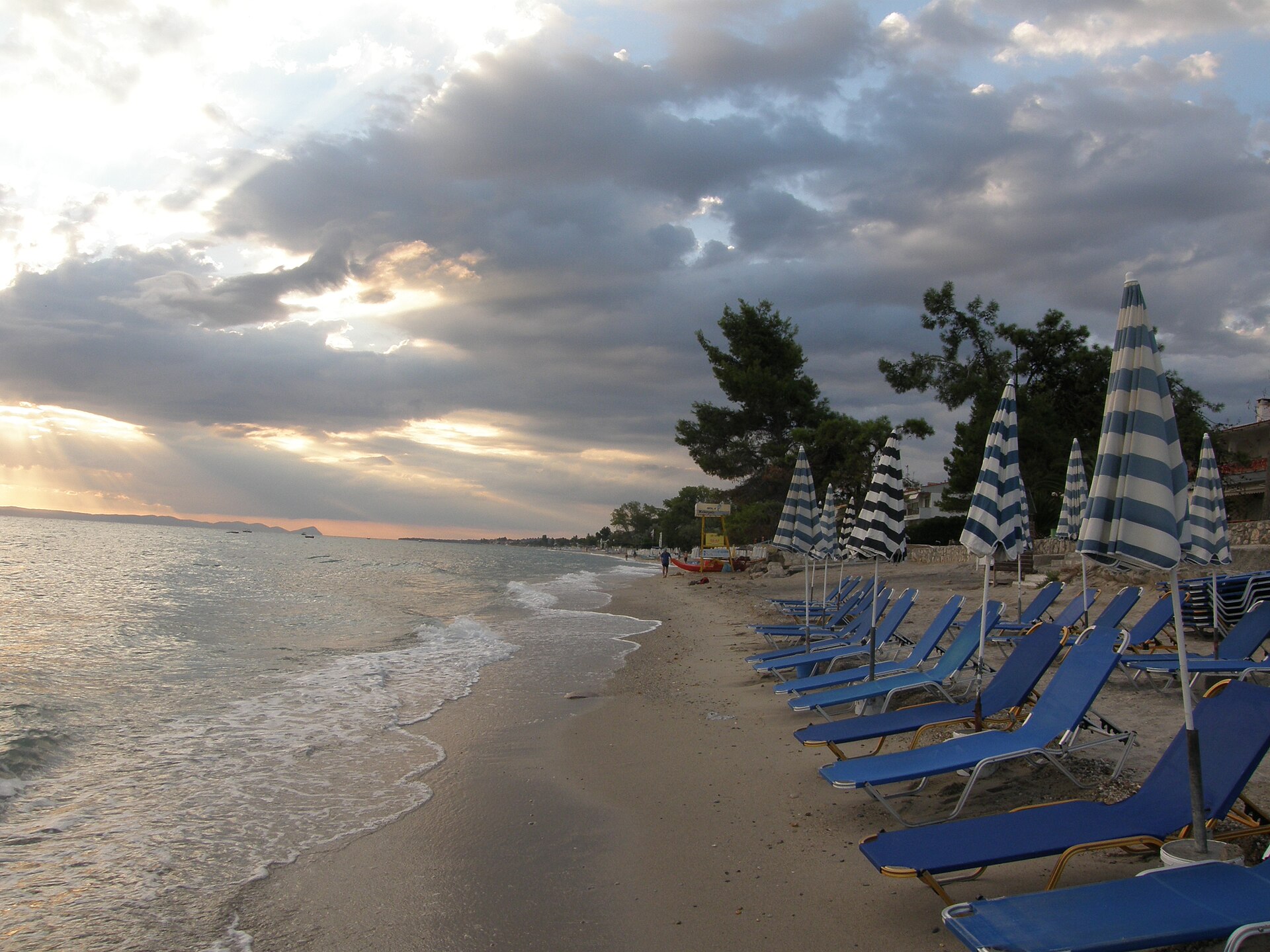
The main beach stretches for more than a kilometer and a half of fine, light-colored sand, with a seabed that slopes very gently: a feature that makes Khaniotis one of the most suitable destinations in Chalkidiki for families with young children. Along the shore, organized stretches with umbrellas, sunbeds and beach bars alternate with freer, quieter sections toward the northern and southern ends. Water sports are not lacking, from pedalos to windsurfing, while the sea, protected by the Thermaic Gulf, generally remains calm for most of the summer season.
Kryopigi, the village of the cold spring
A few kilometers south of Khaniotis, along the same western coast of Kassandra, lies Kryopigi, whose name literally means "cold spring" and refers to a water source that once supplied travelers and shepherds. The village retains a more intimate layout than nearby Khaniotis, with an equally wide, sandy beach and a center where traditional taverns coexist with a few more modern venues. Kryopigi is an ideal stop for those staying in Khaniotis who are looking for a slightly quieter day at the sea or wish to discover another corner of the coast without going too far.
Kallithea and ancient Aphytis
A little further north, Kallithea is today one of the liveliest and most fashionable centers of Kassandra, but its territory holds the traces of ancient Aphytis, a Greek city known in antiquity for the cult of Zeus Ammon and for the quality of its wine and oil. The archaeological excavations, open to visitors near the modern town, yield remains of temples and fortifications that testify to the site's importance in classical and Hellenistic times. A visit to Kallithea, easily reached from Khaniotis in a few minutes by car, allows you to alternate a day at the sea with a brief encounter with the peninsula's ancient history.
Nea Fokea and the Byzantine harbor
Continuing north along the coast you come to Nea Fokea, founded by Greek refugees from Asia Minor in the early twentieth century on the site of an older settlement. The most striking part of the village is the small harbor, dominated by a Byzantine watchtower that is mirrored in the water: an image often associated with the whole of Kassandra and a classic photo stop for those traveling the peninsula's western coast starting from Khaniotis.
Pine woods, olive groves and hinterland
Behind the coastal strip, the hinterland of Kassandra climbs gently toward the center of the peninsula, covered by extensive pine woods that in summer scent the air with resin and by centuries-old olive groves that produce one of the most prized olive varieties in all of Greece, the Chalkidikis variety, large and fleshy, often served as an appetizer in the local taverns. Small dirt roads allow for walks and bike rides through the Mediterranean scrub, offering a quiet, shaded counterpoint to days spent at the beach, particularly welcome during the hottest hours of July and August.
Flavors and produce of Chalkidiki
The cuisine of Khaniotis and the nearby villages reflects the agricultural richness of the peninsula: extra virgin olive oil with a rounded flavor, large green table olives, pine honey gathered in the hinterland's pine woods, and the catch of the day, which the seafront taverns serve grilled or fried according to tradition. Tsipouro, the pomace spirit that accompanies appetizers during long evening dinners, is not lacking, nor are the honey-and-walnut sweets typical of northern Greek pastry. Many taverns still maintain a direct relationship with local producers, offering a genuine, seasonal dining experience.
Evening life and venues on the seafront
Khaniotis is known, together with nearby Kallithea, as one of the liveliest nightlife centers of Kassandra, while still keeping a more family-friendly tone than other destinations on the coast. Every evening the seafront fills with venues playing music, cocktail bars and cafés that stay open late, while in the streets further inland there are clubs with music programming aimed at a younger crowd.
- Evening stroll along the seafront among taverns and beach bars
- A swim in shallow, clear waters suitable for children
- A trip to Nea Fokea to photograph the Byzantine tower on the harbor
- A visit to the excavations of ancient Aphytis in Kallithea
- An excursion into the hinterland among pine woods and centuries-old olive groves
- A dinner of fresh fish and Chalkidikis olives accompanied by tsipouro
When to go
Khaniotis's beach season runs mainly from May to September, with the Mediterranean climate guaranteeing hot, sunny summers and pleasant sea temperatures already from June onward. July and August are the busiest and liveliest months, when the whole of Kassandra fills with Greek and European tourists and nightlife reaches its peak; those looking for a quieter atmosphere, while still enjoying a warm sea, may prefer June or the second half of September, when the beaches are less crowded and accommodation prices tend to fall.
FAQ
Come si raggiunge Khaniotis dall'aeroporto di Salonicco?
Qual è il periodo migliore per visitare Khaniotis?
Cosa vedere in un giorno partendo da Khaniotis?
Khaniotis è adatta alle famiglie con bambini?
Dove si parcheggia a Khaniotis?
Quanto tempo conviene restare a Khaniotis?
Getting there
- Aeroporto Internazionale di Salonicco "Macedonia" (SKG), circa 90 km, un'ora e un quarto d'auto
- Da Salonicco si segue la superstrada verso Nea Moudania, si attraversa il canale che collega la penisola di Kassandra alla terraferma e si prosegue lungo la costa occidentale fino a Khaniotis; in alta stagione conviene noleggiare un'auto per muoversi agevolmente tra i villaggi della penisola.
- Nei mesi di luglio e agosto è consigliabile prenotare alloggio e transfer con largo anticipo, poiché la Kassandra è una delle mete estive più richieste dai turisti di Salonicco e dell'Europa centrale.
Perfect for
Una lunga spiaggia di sabbia con fondale basso, ideale per famiglie e per lunghe giornate tra bagni e beach bar.
Dintorni ricchi di tracce antiche, dagli scavi di Aphytis a Kallithea alla torre bizantina di Nea Fokea.
Pinete profumate e uliveti secolari nell'entroterra della penisola di Kassandra, perfetti per passeggiate lontano dalla folla.
Olive Chalkidikis, olio locale, pesce fresco e tsipouro da gustare nelle taverne del lungomare.
Un lungomare animato la sera, tra cocktail bar, musica dal vivo e locali aperti fino a tardi.
To see