Kardhamili
In the ninth book of the Iliad, Agamemnon lists seven cities of Laconia to be offered to Achilles to placate his wrath: among them...
Updated 8 July 2026
This season · July · Summer
What to do in Kardhamili now
The story
The story of Kardhamili
A name that comes from Homer
The link between Kardamyli and Homeric antiquity is the first thing every local guide tells visitors, and not by chance: it is a heritage the community has kept alive through the centuries, even when only a few traces of the classical site remained. Excavations and ancient sources place settlements in the area dating back to the Bronze Age, with continuous habitation during the Mycenaean period, the very world of palaces and warrior lords that the Iliad describes. In historical times Kardamyle appears among the cities of Laconia subject to Sparta, before breaking away in the Hellenistic period along with other coastal towns, forming the league of the 'free cities' that the Romans later recognised and protected as an autonomous buffer between Sparta and Messenia.
Byzantines, Ottomans and the autonomy of the Mani
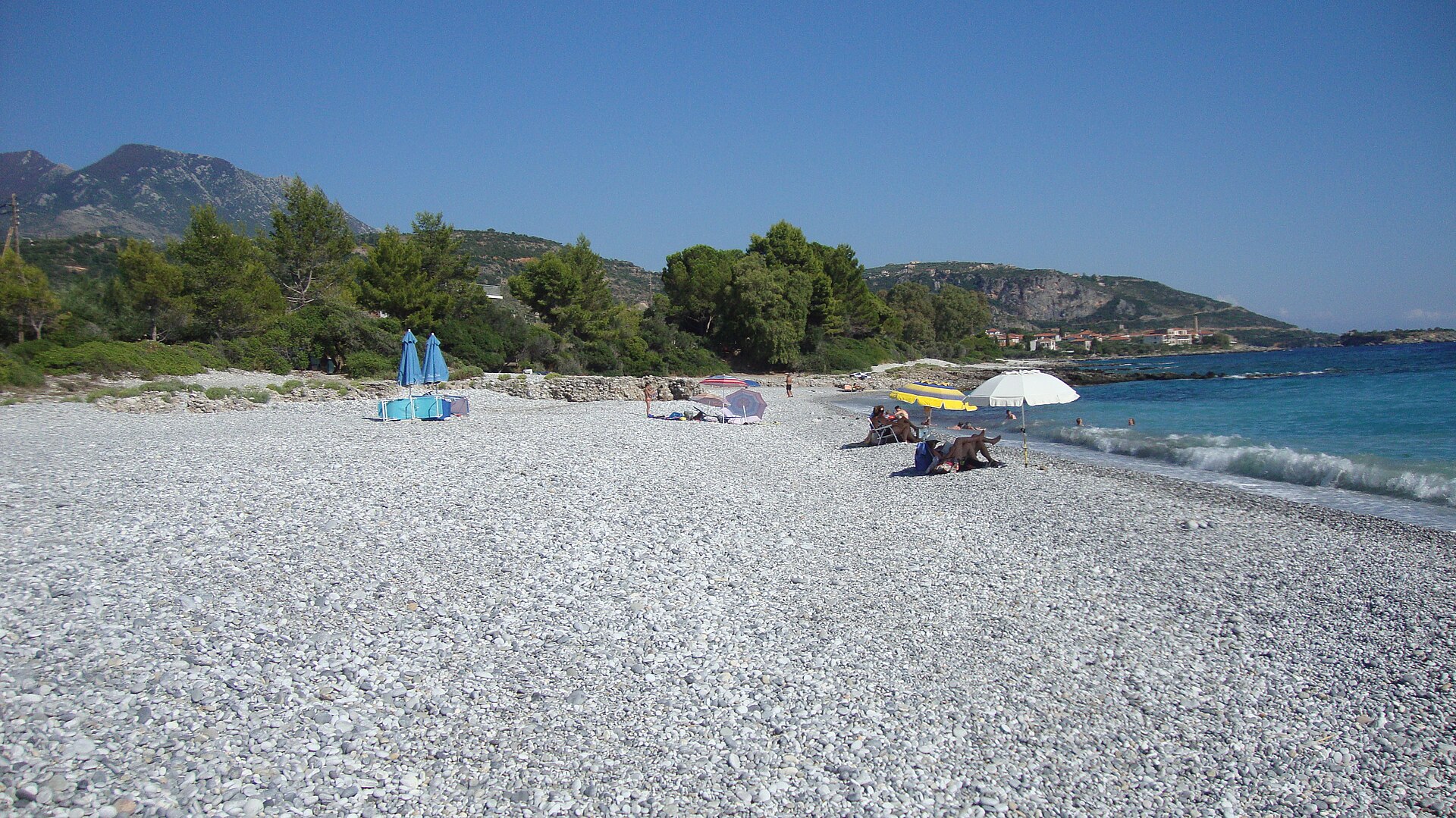
During the Byzantine Middle Ages the Mani peninsula, and Kardamyli with it, remained a peripheral area difficult for Constantinople to control, helped by the steep terrain of Taygetus that isolated coastal communities. With the arrival of Ottoman rule in the 15th century, the Mani was never truly subdued: local clans, organised into a system of warring families often fighting each other for control of land and water, paid nominal tribute while maintaining a de facto armed independence. It was in this context of feuds and Ottoman pressure that the defensive architecture still characterising Kardamyli today was born: multi-storey stone towers, built not only against the external enemy but also against the rival clan in the neighbouring village, in a spiral of vendettas that local tradition calls the Maniot vendetta.
Old Kardamyli and its towers
The most fascinating core of the village is the Palia Chora, old Kardamyli, a cluster of grey stone tower-houses gathered on a small promontory a short walk from the little harbour. The towers, some restored and open to visitors as an open-air museum, belonged to the Mourtzinos family, one of the most powerful clans in the area, allied with the Mavromichalis of Areopoli in the struggle for Greek independence in 1821. Walking among these dry-stone buildings, with their narrow loopholes and slate-slab roofs, conveys better than any account the atmosphere of a world where a house also had to be a fortress. The complex is now protected as an archaeological and architectural site, and entry is generally free during daylight hours.
The church of Agios Spyridon
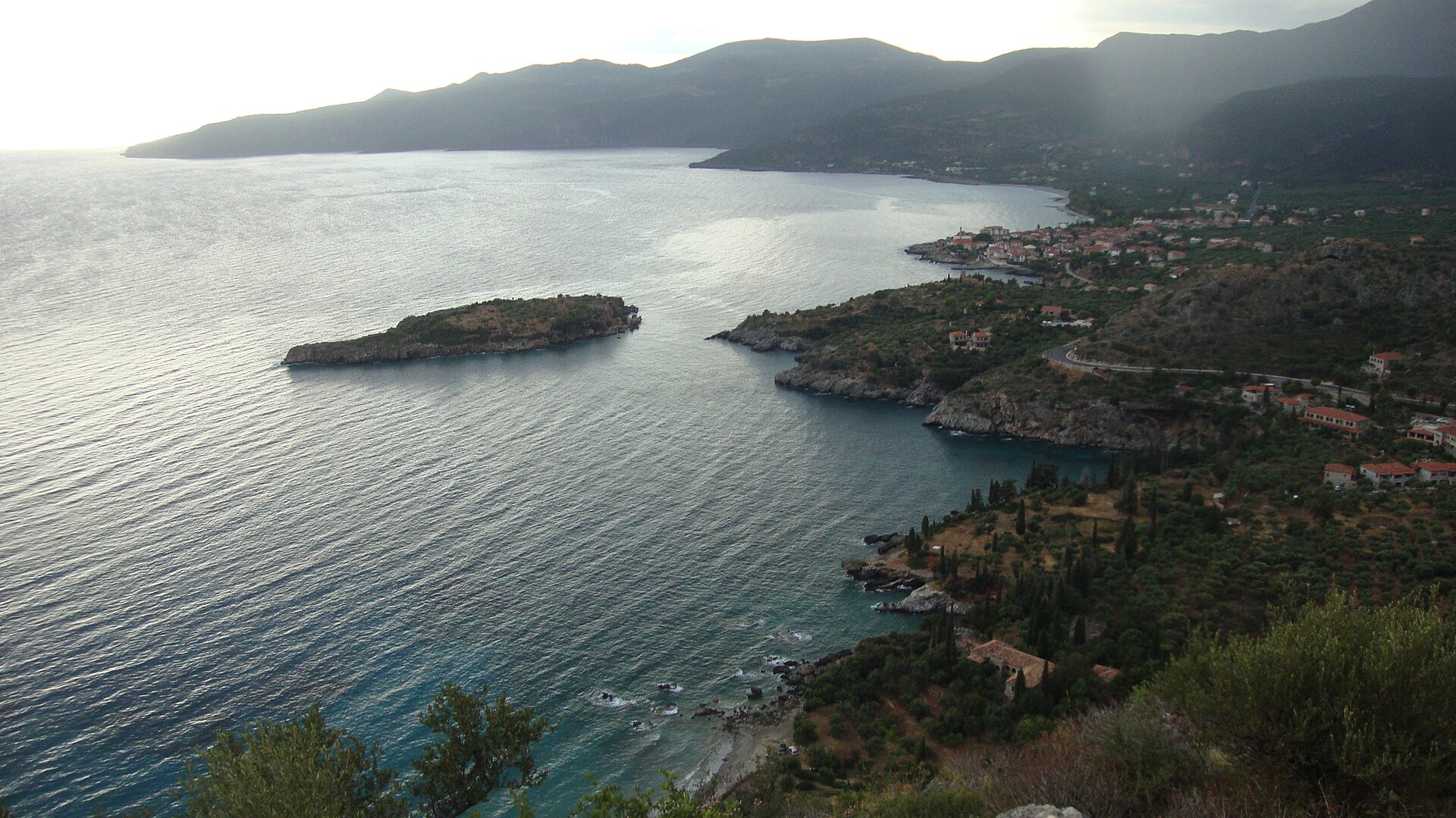
Inside the enclosure of Old Kardamyli stands the church of Agios Spyridon, one of the Mani's most representative religious buildings for its carved stone bell-gable, decorated with motifs echoing late Byzantine art despite being of more recent manufacture, datable between the 18th and 19th centuries. The façade, with its rosette bas-relief and inscriptions worn by time, is one of the village's most photographed subjects, but its value goes beyond aesthetics: the church was the spiritual heart of the Mourtzinos clan and the place where religious services were celebrated as well as, according to oral tradition, solemn peace agreements between feuding families.
The Kastro and the temple of the Dioscuri
Climbing beyond Old Kardamyli, toward the high ground overlooking the gulf, one finds the remains of a small fortified settlement of more ancient origin, which local tradition associates with the Kastro mentioned by nineteenth-century travellers, and not far off the traces of a small temple dedicated to the Dioscuri, Castor and Pollux, deities particularly venerated throughout Laconia for their mythological link to Sparta. These are not monumental ruins, but a site that allows one to read the stratification of the place: Mycenaean settlement, classical sanctuary, Byzantine fortification and finally Ottoman-era towers, all contained within a few hundred square metres perched above the sea.
The Viros Gorge
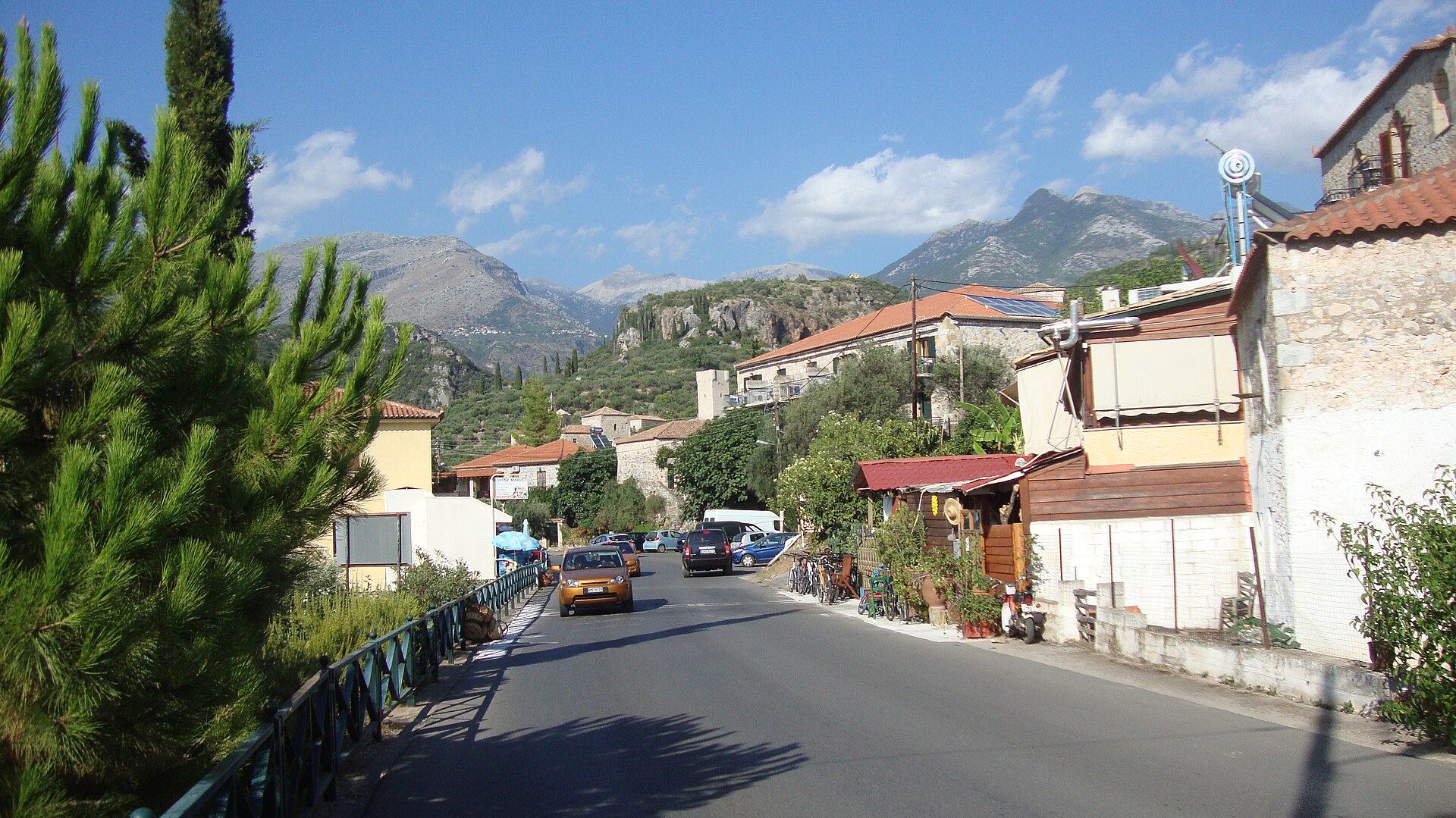
From Kardamyli begins one of the most celebrated hiking routes in the Peloponnese, the one that climbs the Viros Gorge (Faraggi Vyrou), a canyon carved by the stream of the same name between limestone walls that in some points exceed a hundred metres in height. The trail, marked and well-frequented but requiring proper footwear, crosses forests of centuries-old plane trees, humpbacked stone bridges and small Byzantine chapels set into the rock, before emerging near the villages of Exochori and Petrovouni on the other side of Taygetus. It is a half-day excursion that offers a perfect counterpoint to the coast, showing the wilder, less frequented Mani.
Patrick Leigh Fermor's house
A short distance south of the village, toward Kalamitsi bay, stands the house that the British writer and traveller Patrick Leigh Fermor had built in the 1960s together with his wife Joan, designing it in close collaboration with local architects so that it would engage in dialogue with the local stone and olive trees. Fermor, who as a young man had walked across Europe on foot and fought in the resistance in Crete during the war, chose Kardamyli as his adoptive homeland and wrote some of his best-known books on the Mani there. On his death the property passed to the Benaki Museum in Athens, which manages it as a cultural residence and periodically opens it to the public for guided visits, a small literary pilgrimage much cherished by more curious travellers.
Beaches between rocks and pebbles
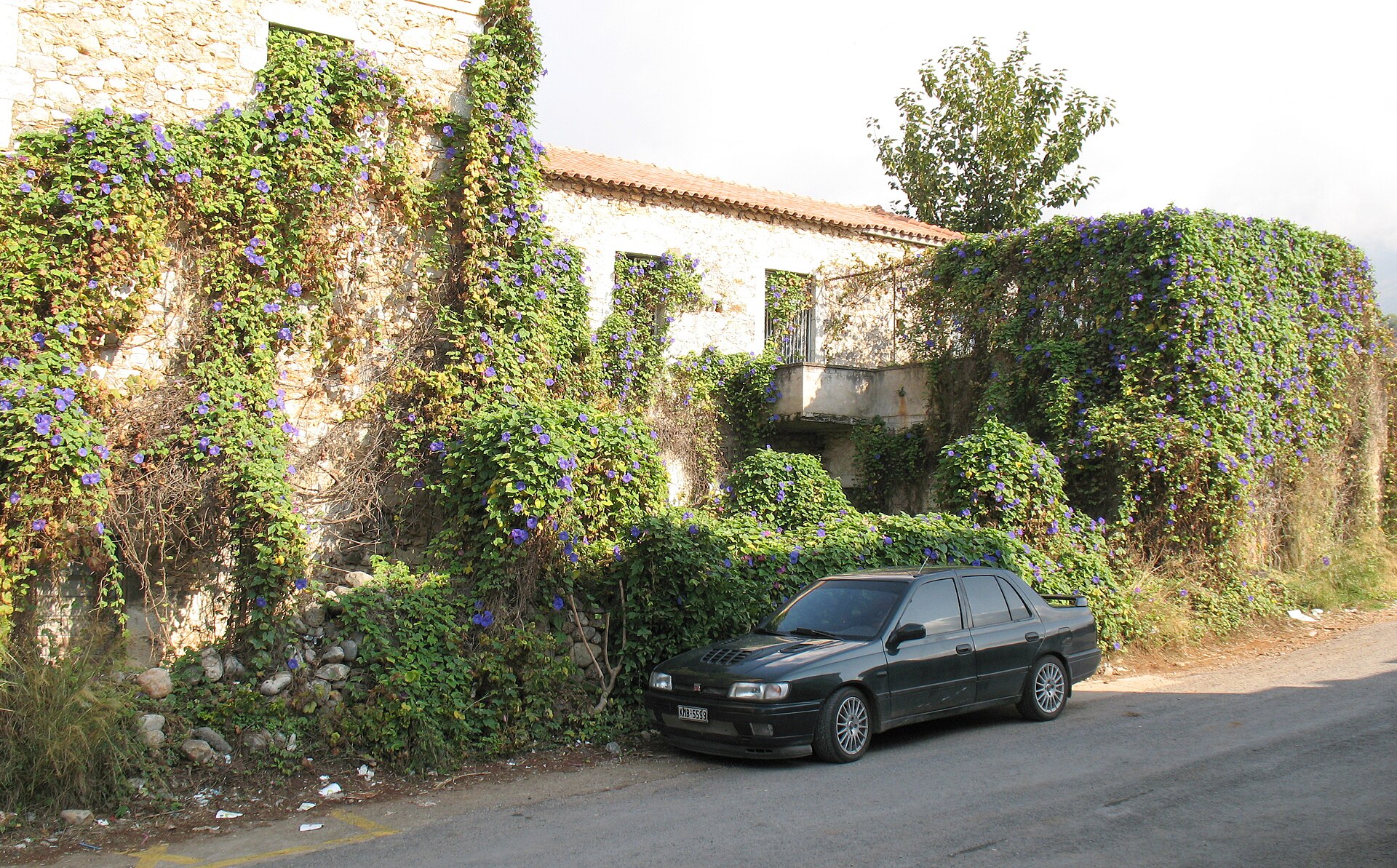
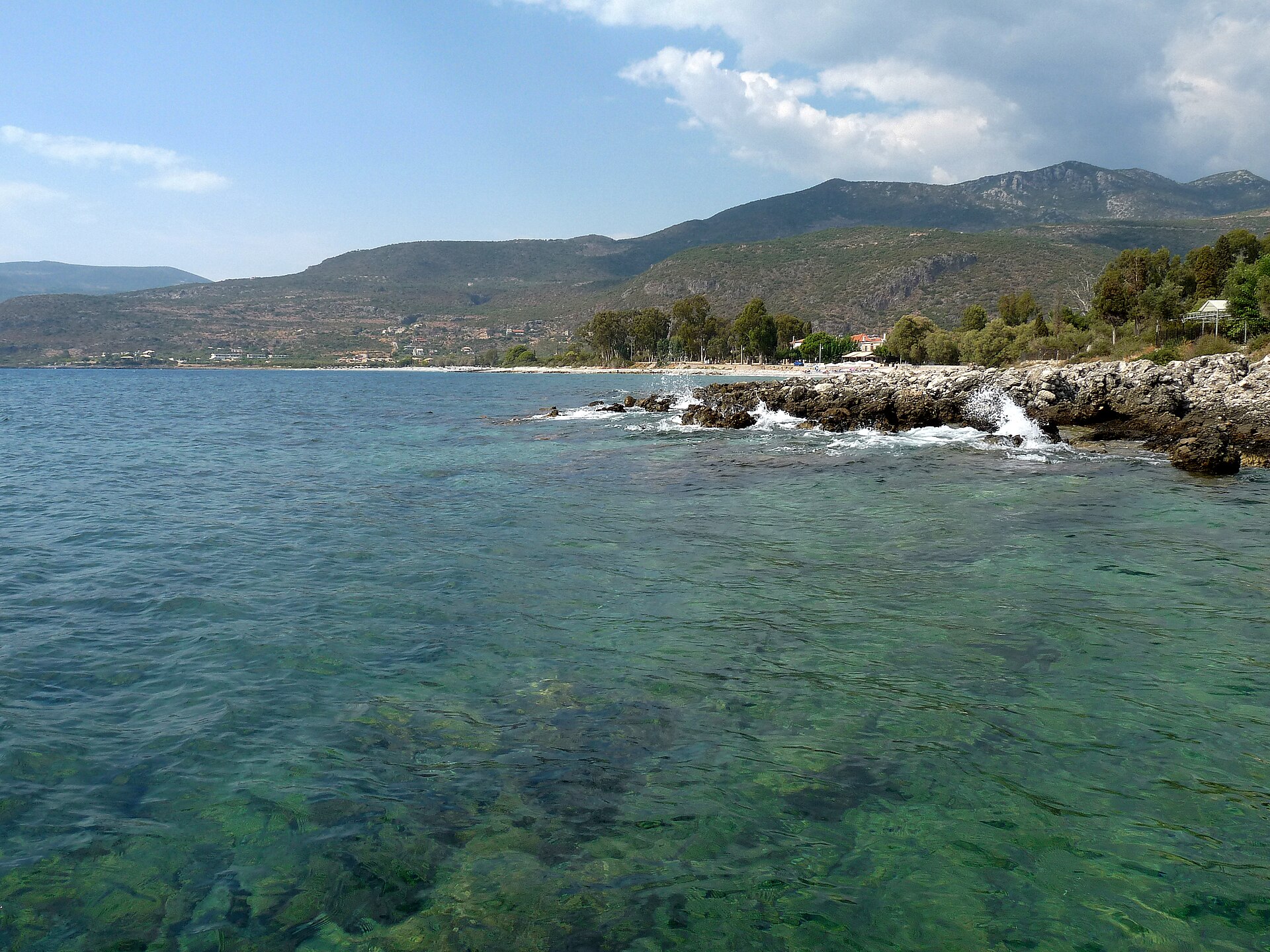
Kardamyli's coastline alternates small coves of pale pebbles with slabs of smoothed rock, in a landscape more Mediterranean than tropical but of great character. Ritsa, the beach closest to the centre, is shaded by tamarisk trees and frequented mainly by those staying in the village; a little further south lies Kalamitsi, wide and breezy, also appreciated by surfers when the meltemi blows steadily; to the north, toward Stoupa, Foneas beach owes its name (meaning 'murderer') to a rock formation that, according to local legend, caused shipwrecks, and today offers one of the most photographed views on the Messenian coast.
Taygetus and the inland villages
Behind Kardamyli rises the Taygetus range, which with Profitis Ilias exceeds 2,400 metres and remains snow-capped well into spring, offering a scenic backdrop few other coastal villages in Greece can boast. On its slopes, reachable by short drives or on foot along ancient mule tracks, lie villages such as Exochori, Petrovouni and Proastio, stone hamlets almost deserted in winter but home to Byzantine churches with original frescoes, terraced olive groves and a silence that deliberately contrasts with the summer bustle of the coast. Proastio in particular preserves one of the highest concentrations of small medieval churches in the whole Mani.
The flavours of the Mani
Kardamyli's cuisine reflects the economy of a land poor in water but rich in olive trees, wild herbs and small-scale livestock farming. The local extra virgin olive oil, often produced in small family-run presses, is among the most prized in the Peloponnese; syglino, marinated and smoked pork preserved in its own fat, is a speciality rooted in pre-refrigeration preservation techniques; lalangia, strips of fried dough served with honey or cheese, traditionally accompany patron saint festivals. There is no shortage of aged goat cheeses and local wines, often still produced in small quantities from family-run vineyards on the terraces around the village.
Festivals, memory and daily life
Kardamyli lives at a double pace: the bustle of summer, when taverns and small seafront bars fill with international visitors drawn also by the literary myth of Leigh Fermor, and the quiet of the cold months, when the village returns to what it has always been, marked by religious feast days. The patron saint's festival and the celebrations of Holy Week remain powerfully identity-defining moments, with processions weaving Orthodox faith together with a historical memory of the Mani never entirely dormant, made of tales of towers, clans and an independence won more by arms than by treaties.
When to go
Spring, between April and June, is probably the best time for Kardamyli: Taygetus is still snow-capped on its peaks, the Viros Gorge flows abundantly and the trails can be walked without the intense heat of summer. Autumn, from September to mid-October, offers a sea still warm and a particularly clear light on the stone of the villages. Summer remains the liveliest season but also the hottest and most crowded on weekends, while winter, though harsh on the heights, offers an authentic atmosphere for those seeking the quietest Mani, far from beach tourism.
- Strolling among the stone towers of Old Kardamyli and the church of Agios Spyridon
- Hiking a stretch of the Viros Gorge to its stone bridges and centuries-old plane trees
- Swimming at the rocky beach of Foneas or in the wide bay of Kalamitsi
- Visiting the Patrick Leigh Fermor house-museum managed by the Benaki Museum
- Climbing up to the mountain villages of Exochori and Proastio for the frescoed Byzantine churches
- Tasting syglino and local extra virgin olive oil at a taverna by the little harbour
- Admiring the sunset over the Gulf of Messenia with Taygetus behind you
FAQ
Quanto tempo serve per visitare Kardamyli?
Kardamyli è adatta a chi viaggia con bambini?
Dove si parcheggia in paese?
Si può visitare la casa di Patrick Leigh Fermor?
È un buon punto di partenza per esplorare il Mani?
Getting there
- Aeroporto di Kalamata (KLX), circa 40 km a nord
- Nessuna linea ferroviaria attiva raggiunge direttamente Kardamyli; la rete ferroviaria del Peloponneso meridionale è oggi limitata
- Da Kalamata si segue la strada costiera verso sud in circa 45 minuti; da Atene si percorre l'autostrada verso Tripoli e Kalamata, per un totale di circa 3 ore e mezza di guida
- Un'auto a noleggio è praticamente indispensabile per muoversi tra il paese, le spiagge e i villaggi di montagna, dato che i collegamenti con autobus locali sono limitati fuori stagione
Perfect for
Spiagge di ciottoli e formazioni rocciose in un golfo ancora poco affollato rispetto ad altre mete greche.
La gola di Viros e i sentieri verso i villaggi del Taigeto offrono escursioni di grande varietà paesaggistica.
Torri maniote, chiese bizantine e un'eco omerica che attraversa oltre tremila anni di storia.
La casa di Patrick Leigh Fermor rende il paese una tappa quasi obbligata per gli appassionati di viaggio e scrittura.
Olio extravergine, syglino e formaggi di capra raccontano una cucina povera ma identitaria.
To see